SPEAKERS

We are excited to have four keynotes speakers sharing their expertise at our conference. Please visit their personal websites to find out more about them.

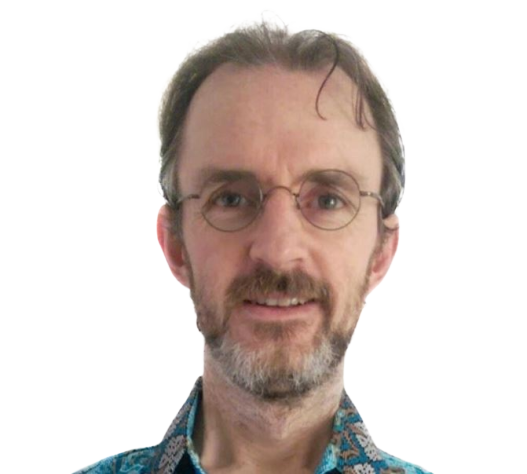
Prof. Dr. Thomas Brinkhoff

Prof. Dr. Thomas Brinkhoff is a professor in Geoinformatics at the Jade University in Oldenburg. He is also a member of the OFFIS Institute for Information Technology Oldenburg and the Center for Sustainable Spatial Development in Oldenburg (ZENARiO). He serves currently as chair of the Society of Geoinformatics in Northern Germany (GiN) and as a member of several program committees.
His main research and teaching interest is the management of spatial data. Thomas Brinkhoff studied computer science at the University of Bremen. He received his doctoral degree from the Ludwig-Maximilians-University of Munich for his work on efficient processing of spatial joins in spatial database system. Before his current position, he worked as a project manager on Geographic Information System (GIS) solutions for traffic information and emergency services.
Thomas Brinkhoff wrote the first German textbook about spatial database system, which is currently published in the third edition. His network-based generator of moving objects has been used by several hundreds of publications as a benchmark for spatiotemporal data structures and algorithms. He also runs a popular website that is based on georeferenced population data.
His current works are related to the management and analysis of spatial sensor data and of data from Volunteered Geographic Information (VGI) projects. He was significantly involved in the development of the master course “Spatial Information Science” in Oldenburg that offers three specializations; one of them is the analysis of spatial data.
KEYNOTE (working title):
“What is special about spatial data management?”

The question “What is special about spatial?” has been asked for decades. Do we really need special solutions for handling geospatial data? Having this question in mind, the talk will discuss several previous and current challenges in spatial data management and their (possible) solutions.


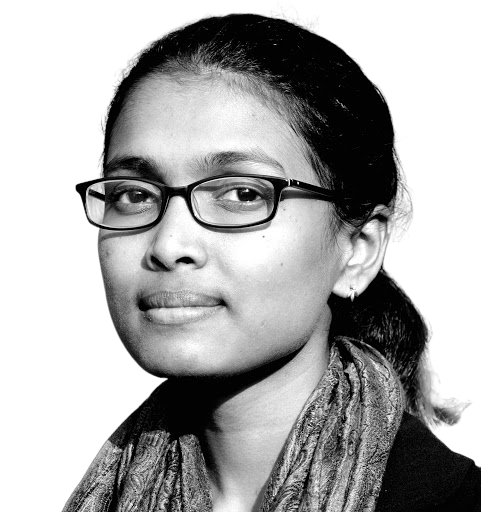
Rohini S. Swaminathan

Rohini S. Swaminathan currently serves as an international consultant at World Food Programme (WFP) , Rome, Lazio Italy since April 2018. Her specialities are on applications of Geospatial Science in Disaster Risk Reduction, Environmental Management, International Development and Health, Training and Capacity Development. She has also worked as United Nations Volunteers (UNV) GIS specialist at UNDP, New York, United States from April 2017 to February 2018 providing technical coordination and support on mapping, training and capacity building activities. Her industrial working experiences also include working as a Geographic Information System (GIS) Consultant at World Health Organization (WHO), Geneva area, Switzerland from February 2017 and May 2017, GIS and Capacity Development Consultant at United Nations Institute for Training & Research (UNITAR), Geneva Area, Switzerland from June 2015 to December 2016 and Center Lead / Remote Sensing Consultant at NASA DEVELOP National Program, Wise, Virginia from June 2012 to December 2014. Her academic experience as Graduate Administrative Assistant at Purdue University was from October 2010 to May 2012. She has completed bachelor degree in the field of Geoinformatics at Anna University in 2010 and obtained master degree in the field of Geomatics at Purdue University in 2012. She has given her contribution as a volunteer for the organizations namely Imece Inisiatifi in June 2016, Kenya Red Cross in September 2016 to support developing geospatial applications with Red Cross activities and Sevaikarangal from February 2015 to Aug 2016.

KEYNOTE (working title):
“Geospatial innovation in the Humanitarian world -
before, during and after Emergencies”

Talking about the geospatial tools we are using in the humanitarian world now, and also giving a reality check on what works and what doesn't, what is practical vs. a wish list - especially where we need the fresh graduates and younger innovators to come in and help.

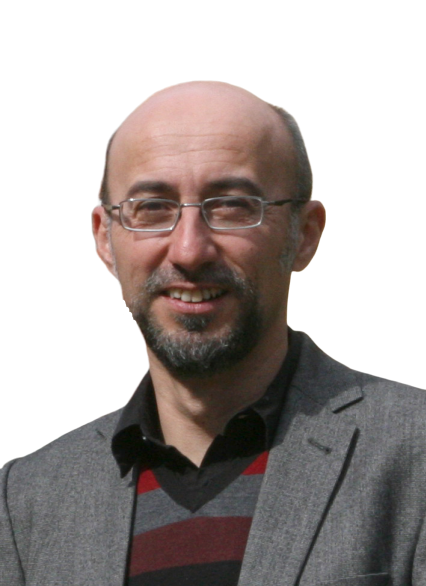
Tim Sutton

Tim Sutton co-founded Kartoza in 2014 after running Linfiniti since 2008. Tim has been involved with QGIS since 2002, soon after its inception. Tim is also a core QGIS committer and Project Steering Committee member for both the InaSAFE and QGIS.org projects. Tim has also conducted numerous training courses relating to QGIS, FOSS GIS and InaSAFE over the years. He has also created a great many open source projects which he shares with the world on GitHub.
Coming from a background in applied conservation management, Tim Sutton became involved in GIS in 1998 when he joined and helped to set up the GIS division of for the Scientific Services group of the Western Cape Nature Conservation Board, South Africa. During this time, he completed a master's degree in GIS and Conservation (cum laude). Tim was born and raised in South Africa and has travelled extensively throughout the world. He now lives in Portugal.

KEYNOTE (working title):
“Geospatial technology is a key enabler for social upliftment, environmental stewardship and the betterment of our society:
so why isn't GIS pervasive?”

During his talk, Tim will reflect on the significance of GeoSpatial data and tools for society and question whether GIS is "ours" or "theirs". This talk is also known as the "did I spend 17 years of my life making tools that people don´t need?" and "are you about to spend the next 17 years of your life making tools that people don´t need?" talk. My talk will maybe be a little different from what you are used to for a keynote...we will poke fun at ourselves and look for bright lights of hope in a world that sometimes seems bleak and lacking in promise.

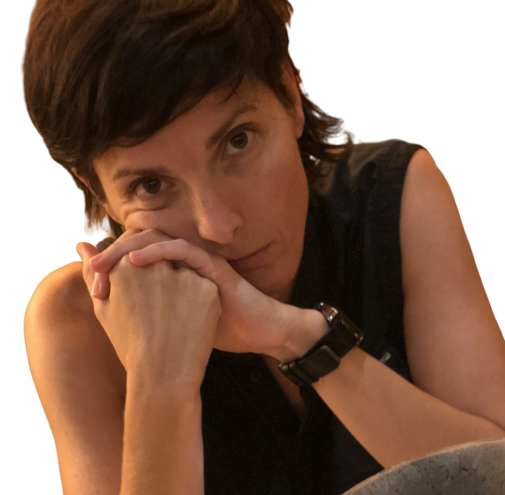
Laura Diaz

Laura Diaz

Laura Diaz is a Computer Engineer who has developed her career in different countries working for both the public and the private sector. She obtained her PhD in GIS focusing on the integration of geospatial Information. She has authored different articles related to the improvement of geospatial services interoperability and hybrid infrastructure models for the publication of geospatial information.
She started her GIS career as a programmer in the private sector working for different international companies and participating in multiple research and development projects. She moved back to academia as an associate researcher in Geotec (UJI). In 2013 she joined the United Nations as Data Scientist in Business Intelligence projects. She is currently serving as business and system analyst for the Situational Awareness Programme of the Department of Operational Support specially on the Visualization and Intelligence Analysis track.

KEYNOTE (working title):
“Geospatial technologies are here...”

GIS has been for decades a very specialized field strongly dedicated to specific domains such as urban planning or environment. GIS experts represent a rich group of diverse professional skills and profiles who have work together to merge diverse disciplines such as cartography, topography, design or IT technologies. Far from the big audiences, GIS have been watching the mainstream IT progress from certain distance, making us wonder what was special about spatial. Now, this trend seems to have changed. IT mainstream has realized the power of maps, and any IT technology is looking into maps for flashy visualizations, smart analysis, new functionalities. When everybody needs a map in their life, it is the turn of the geospatial experts... make it happen!